Looking for something?
Wing Chun Academy (IF) Stockholm, also known as the Wing Chun Academy Association - Sweden (WCAA-Sweden) wingchun.intrawebmaster.com
Wing Chun 詠春 (咏春 Yǒng Chūn) is the most famous non-sport Cantonese martial art (Kung Fu 功夫). Turn weakness into strength with this soft, internal Wing Chun 内家詠春拳.
Wing Chun is designed as a unique real-time survival art and health-improving discipline rather than a competitive combat sport. It focuses on defense under unfair conditions and challenging environments, which includes:
- Defending against a larger, stronger, and aggressive attacker with harmful intentions.
- Defending in dark, narrow environments and on unfriendly terrain.
- Defending effectively regardless of indoor/outdoor clothing or weather conditions.
- Defending in unfair situations without assistance, such as against multiple attackers.

Wing Chun is a martial art system designed for self-defense, built around a structured doctrine and a set of principles to be practiced thoughtfully. Its techniques incorporate built-in risk mitigation to minimize injury and impact, particularly in situations where initial defenses or counterattacks fail.
The movements in Wing Chun are often compared to flowing water: small, soft, and controlled, emphasizing the generation of soft power and the ability to recycle an opponent’s force to your advantage. While this approach may seem unusual at first, it is highly effective in close-range defense, allowing practitioners to avoid excessive clinching, conserve energy, and respond efficiently.
The literal meaning of “Wing Chun” is “eternal spring,” and it is also the name of a Chinese girl. As a holistic system, Wing Chun integrates aspects of internal martial arts and emphasizes academic pedagogy. Training begins with internal development—focusing on theory, mind control, and internal energy (bio-energy)—before progressing to physical techniques and external applications.
Cognitive control is central to Wing Chun practice, similar to disciplines such as Yoga, Qigong, or other internal martial arts like Tai Chi. This internal focus allows for soft-power development and a highly refined, efficient approach to combat. Unique among martial arts, Wing Chun was historically designed with considerations for female practitioners, resulting in a system that prioritizes leverage, efficiency, and technique over brute strength.
Wing Chun is not an athletic martial art; rather, it is a system designed to overcome the reliance on sheer athleticism. As such, it is not primarily aimed at children or highly athletic individuals. Wing Chun is a concept- and principle-based system, more akin to a structured architecture than a sport. Learning Wing Chun is like learning a language, with a “grammar” designed to enable automatic, real-time reactions. Mastery requires understanding the underlying theories, knowing how to execute techniques, and applying them reflexively in practice.
Wing Chun is a non-violent, non-competitive martial art focused on self-defense. In any conflict, there is no true winner; maintaining a calm and sustainable mindset is essential to avoid escalation. For this reason, Wing Chun training begins with cultivating stillness and mental calmness—learning to observe and wait for the attacker’s intention to close the distance. This focus on awareness and control is what makes Wing Chun particularly effective for close-range standing defense in any environment.
Wing Chun Academy Association – Sweden (詠春拳學會 – 瑞典, WCAA-Sweden) educates Wing Chun instructors, pedagogues, and beginners from an academic perspective rather than providing standard training. It is not a sport or recreational club. The WCAA-Sweden lineage takes a holistic approach, developing practitioners into masters through both theory and practice, with continuous personal growth as a lifestyle. Training emphasizes awareness, stress management and calmness, survival mindset, health and wellness, and practical success in life. WCAA-Sweden also provides the knowledge and guidance needed to start your own Wing Chun school.
Our school applies traditional Wing Chun concepts and stands apart from modern training methods that prioritize profit and mass-production grading systems. Instead, we focus on academic-style education and tailor the program to small groups, meeting the specific needs of each student. This is why we are called an “Academy” rather than a typical training club.
For those interested in applying Wing Chun in competitive combat sports, specific guidance is provided, as competition-oriented training falls outside the standard program scope.
Wing Chun KungFu/GongFu 詠春 功夫 is known as one of the most secret and effective Cantonese martial arts from the Chinese Qing dynasty based on system concepts/principles, since it was a paradigm shift within the traditional martial art concept. As example, the famous practitioner and legend Bruce Lee 李小龍 understood it, used it to develop his own Kung Fu system Jeet Kwan Do (JDK) 截拳道. Wing Chun system is originally designed to be most efficient in narrow environments such as lifts and subways, since it is a unique close-range standing combat and does not look good for entertainment.
Wing Chun Lineage & Style
WCAA-Sweden Wing Chun is known as the first or only Ip Man /Yip Man 葉問 2nd generation Wing Chun academy in Stockholm, Sweden, our a lineage is registered & certified (ref. Genealogical Register at www.ipchun.hk) direct under the grandmaster Ip Chun / Yip Chun 葉準 WCAA's Wing Chun was founded and further developed by Sifu (master) Peter Yeung to become more of a complete internal martial art, read more below:
There are many styles of Wing Chun in this world, almost every Sifu/Shifu 師父 (meaning owner/master/father of the system art, rather than meaning of a skill person & teacher i.e. 師傅) develop it's own style of Wing Chun when master it based on the martial art background and understanding. Wing Chun is a concept and principles driven martial art system for enable further development when master it, which is the idea of it. In the modern world is the concept of master degree in e.g. in technology for further development. There are no right or wrong on which Wing Chun style is better or not, the question is if the styles suited your as person from personality, mindset/values, pedagogical way, physical body condition, discipline/motivation level etc. last is the social relationship with the teacher. Therefore, this website describes more in details this Wing Chun style to verify if it suites you for saving everyone's time, since this school applies a more academic, pedagogic method.
Compliance with the traditional Wing Chun pedagogy and R & R

Culture & History Background
Wing Chun is a Cantonese martial art, and Cantonese is considered an endangered language and culture in China.
Wing Chun originated within the geographical Pearl River Delta area; the Ip Man lineage has its largest base in Hong Kong within this region. In Western history, the Pearl River Delta is known as "The Gateway to China" or the Maritime Silk Road. In modern times, the Pearl River Delta area is at the center of what is today known as the Greater Bay Area.
The Hong Kong SAR is an urban area with the strongest foundation for preserving the Cantonese language (which is endangered and facing survival challenges, having almost disappeared in mainland China) and Cantonese culture. Hong Kong is also known as the "City of Cantonese Martial Arts," where the Kung Fu movie industry began. On July 1, 1997, Hong Kong was handed over from the United Kingdom to the PR of China.
Cantonese is also an officially and internationally recognized spoken language in Hong Kong. From a linguistic perspective, it is not a dialect of the current official standard spoken Chinese language, Mandarin (Putonghua or Guoyu), from the north. Cantonese originates from the ancient Tang language, which was the dominant Chinese language during the Tang Dynasty (唐朝), before northern variants took over throughout China. Traces of the Tang Dynasty linguistic influence can still be found today in Korean and Japanese, which often sound more like typical Cantonese expressions than modern Standard Chinese. Due to these historical and cultural reasons, Cantonese speakers abroad often identify themselves as "Tang people" (唐人, tòhng yàhn).
The Cantonese people and region were part of the ancient 1st millennium BC country of Baiyue (百越), known in Vietnamese as Bách Việt. In later times, the Chinese character Yue (粵 or Yut in Cantonese) was used to distinguish the Guangdong area from Vietnam (越). The Kingdom of Nanyue (南越 or 南粵; Vietnamese: Nam Việt) was established in 204 BC with Panyu (番禺) in today's Guangzhou as its capital. Nanyue encompassed modern Guangdong and Northern Vietnam. For political reasons in the 17th century, the written form of Cantonese was largely replaced by Standard Written Chinese, which is based on spoken Mandarin. This caused an illogical separation between the spoken and written forms of Cantonese. Consequently, specific Cantonese meanings and pronunciations cannot always be accurately represented in Standard Chinese. This remains an issue within the Wing Chun community when documenting and teaching; for example, with "Chi Sao" (known as Wing Chun sticky hands), there are no Standard Chinese characters that can perfectly represent both the Cantonese pronunciation and its direct meaning.
Note that Hong Kong uses Traditional Chinese characters for writing and Cantonese as its official spoken language. Taiwan also uses Traditional Chinese characters but uses Mandarin as its primary spoken language. Meanwhile, mainland China uses Simplified Chinese characters with Mandarin (known as Putonghua) as the main spoken language. From a political perspective in China, there is only one Chinese language, and the rest are considered dialects. However, from a linguistic standpoint, they are distinct languages, with differences similar to those between Swedish and English, or Swedish and the Sami language. They are not mutually intelligible without study. While it may seem unusual from a Chinese perspective that English and Swedish use different written languages despite sharing an alphabet, historical Europe did have a common written language: Latin. In Sweden, Latin was read with Swedish pronunciation, similar to how Cantonese speakers read Chinese characters with Cantonese pronunciation. Because written Chinese is logographic (symbol-based), it can be pronounced differently by Cantonese, Japanese, or Korean speakers. It is similar to the symbol '?', which is recognized globally but pronounced differently depending on the language. Cantonese is an official language in Hong Kong and Macau and is now supported by Google Translate in both spoken and written forms, including romanization and keyboard input.
Hong Kong SAR is famous not only for its martial arts diversity, unique culture (classified as an international city), free trade zone, and tax-free status, but most of all for its unique cuisine.
Note: By learning our Wing Chun, you are helping to preserve our internal Wing Chun so that it may survive (as few internal Wing Chun schools exist globally) and also protecting Cantonese culture from being suppressed and wiped out.
More topics under menu Articles
For what ?
Examples from students
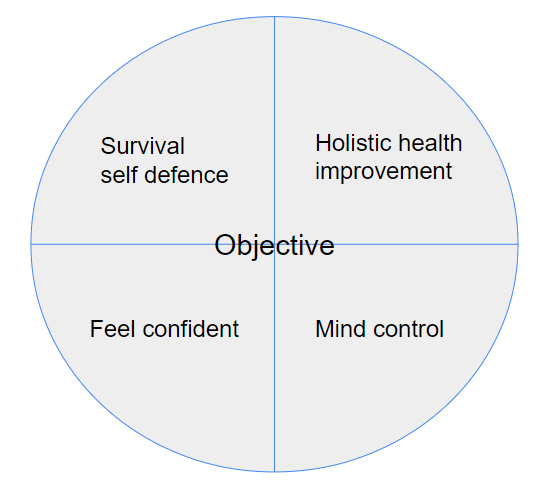
- Whether you seek to overcome insecurity in threatening situations, learn to remain calm and relaxed to gain control during critical moments, or improve your mental and physical wellness through "soft" training, this practice also develops your personal values within a supportive social group that accepts you as you are.
- For those with a vision of self-fulfillment, such as becoming an instructor or mastering a discipline that provides recognition, identity, and influence, or simply enhancing your existing profession. We offer leadership development that can be realized by leading your own classes or establishing your own Wing Chun school.
- Understanding the "what" and the "why" through Wing Chun’s theoretical models enables creative exploration. Testing your ideas through trial & error is both inspiring and exciting.
- Training and coaching together as part of a Kung Fu family, fostering a positive atmosphere as a lifestyle.
- Improving overall health and physical well-being.
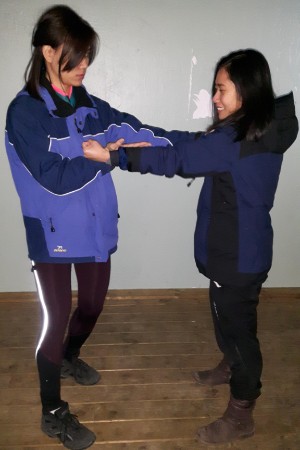 What is Internal Wing Chun & Example of How
Wing Chun was originally designed to integrate internal training methods with external practice. Over time, this internal aspect has largely been forgotten in modern interpretations of the art. Here, we aim to reunite the internal and external approaches in order to return to Wing Chun’s original principles.
Our Internal Wing Chun is a category that focuses on internal martial arts principles. The development begins with internal mind control through relaxed calmness and embodied presence. This is achieved via awareness 覺知 [gok3zi1 / Jué zhī] control and Mindfulness 正念 [zing3nim6 / Zhèngniàn] development as the 1:st stage. The 2:nd stage involves the development of mind power, commonly referred to as Nim Lik 念力 [nim6lik6 / Niànlì]. The 3:rd stage is based on the development of stages 1 & 2 as a capability to focus on Internal Energy or Bioenergy or Qi 氣 to apply it as Internal Force 內勁 [noi6 ging6 / Nèi jìn] as well as for healing 內功療法. In Wing Chun it is known as soft power 柔勁 [jau4 ging6 / Róu jìn] generation 發勁 [faat3 ging6 / Fā jìn] or as we called it Soft Punch, based on relaxation 鬆 [sung1 / Sōng] timing, to achieve this it needs to be trained with what we called Blank Punch, other similar name is Pulled Strike 收勁 [sau1ging6 / Shōu jìn]. Blank Punch an important multi purpose training method, it is not only to avoid training partner to be injured during at full speed drills, it is also the secret method of how to develop internal energy soft punch. This is the start of the secret devastating energy penetration punch 穿勁拳 [cyun1 ging6 kyun4 / Chuān jìn quán] development that hits behind a surface, see evidences video from camera angle 1 and camera angle 2 when one of my student (trained for about 2 years) unconsciousness broke the back UMAB board when the front UMAB board was intact, the demo shows also how to the energy generated from the footwork via body structure via mind focusing. The famous Wing Chun Inch Punch 詠春寸勁 within internal Wing Chun applies the energy penetration punch 穿勁拳. Students who got hit (without a physical hard punch) can feel uncomfortable inside their body at the punched area, so energy healing is therefore important to know and how to recognize hit by an internal energy punch..
Wing Chun as martial art
Many martial arts are based on the components of timing, focus, and control. Wing Chun begins with control and focus, followed by timing, in order to program movements for automatic responses. Power and speed are developed later, once control is firmly established. Learning Wing Chun is similar to learning a new language: you start with the basic elements, like the alphabet. Wing Chun is a component-based system, with building blocks that depend on each other according to specific principles. Just as letters form words and words form sentences according to grammar, these components must eventually combine to produce automatic, real-time responses.
What's Unique?
Wing Chun Academy Association - Sweden (WCAA-Sweden) Wing Chun Lineage
- WCAA Wing Chun focuses on how Wing Chun works in practice and identifies the hidden mechanisms that make it effective. This includes tactical defensive combat and an understanding of why the Wing Chun system is designed the way it is.
-
The WCAA Wing Chun style belongs to the category of Traditional Soft Wing Chun, practiced as an Internal Martial Art and a lifestyle centered on wellness and anti-stress for both body and mind. This holistic internal art includes an analytical/model-simulated mind, awareness (the "feeling filter" and body awareness), mindfulness (the state of mind), and mind-power 念力, which forms the basis for developing internal energy (BioEnergy). A mental "Open-mind" or "Non-judgment" approach through mindfulness is a source of power; this attitude also enables a deeper understanding of traditional Wing Chun. Other "soft" development aspects include mindset prediction, social competencies, pedagogy, self and team leadership, self-discipline, patience, the ability to remain in focused stillness, and the management of negative emotions.
NOTE: The traditional martial arts approach is not designed for large-scale student production. The focus is on quality, principles, and the "why," making it more tailored for the individual within a small group. The Sifu’s role is that of a guiding instructor rather than a traditional trainer. - You will also learn how hidden, traditional Wing Chun strategic principles can be applied against modern martial arts and used for self-defense. This includes psychological attitude training, self-leadership, and close-range weapon defense. The combination of softness and non-muscular strength makes it suitable for individuals with a smaller build, those with health considerations, and females.
-
Since WCAA/WAIS are non-profit and 100% free from subsidy dependency, we can apply a traditional Chinese approach: small family-team development that focuses pedagogical education on quality rather than quantity.
The instructor/Sifu serves as a guide and advisor, utilizing Group-Oriented Leadership (as opposed to Authoritarian-Oriented Leadership) to enable you to be actively engaged as part of the group and to take responsibility for your own training and learning. - Our pedagogical concept incorporates a collaborative learning approach adapted to today's busy lifestyle. This academically-driven approach helps you understand the system’s principles like an engineer rather than just a user—focusing on the background of the system’s design, combat strategies, and theories. In Soft Wing Chun, the principle is: What you see is not what you do; it is merely a consequence.
- WCAA is currently the only Wing Chun academy in Sweden with instructors of Chinese/Cantonese background. Education is conducted mainly in English, with spoken support available in Swedish, Cantonese, and Mandarin (Putonghua). WCAA operates on a foundation of Christian values and utilizes an e-democracy-based decision process.
How Does It Work?
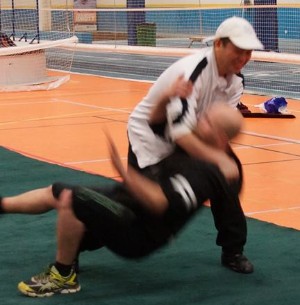 Wing Chun is known as one of the most effective defensive martial arts, specifically designed to be practiced by individuals with less physical strength. The defensive movements are direct and efficient, avoiding unnecessary motion, as the training focus is not on external physical power. Instead, training emphasizes the internal process of programming core principles from the brain's "C-system" (conscious) to the "X-system" (reflective). This process is effectively achieved through mindfulness and mental scenario simulations, which can be practiced even without a training partner. In our system, the training partner's role is primarily for the emulation of real-world scenarios and cases.
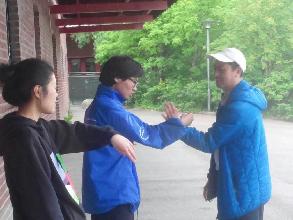 Wing Chun techniques are soft and subtle, requiring high precision in movement and positioning at close range. All movements are multi-tasked between the physical arms and the intentional mind across multiple dimensions. Although the basic movements are few, they can be performed at various levels depending on the practitioner's ambition. Wing Chun is based on the principle of recycling the opponent's power for one's own advantage. This requires mastery of one's own body control and awareness before attempting to control an opponent. Therefore, the Chi Sao training method—one of the most vital partner training exercises—is an efficient and controlled way to emulate close-range combat. Wing Chun consists of different components or building blocks that form a cohesive architecture; training is based on mastering these individual components before integrating them into a complete, working system.
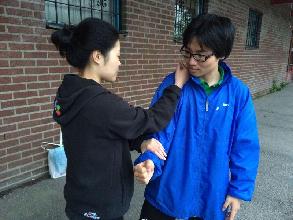
Wing Chun is not a competitive sport; it was created for survival and defense. Consequently, the system includes built-in risk assessment and mitigation strategies. WCAA applies Wing Chun combat strategy and tactics for real-world defense, where training and sparring are geared toward countering attacks from other martial arts styles. Distance control and flexible footwork are fundamental components for maintaining the ideal Wing Chun distance and avoiding being trapped.
WCAA also teaches self-defense scenarios based on Wing Chun principles. We distinguish the concept of self-defense from a "battle" or "fight." A fight is often a mutual decision between two people, whereas self-defense is a non-consensual survival situation that is often unprepared and unfair—involving multiple attackers or weapons.
WCAA Wing Chun also enhances the internal and soft aspects of the practitioner, such as teamwork, awareness, and mental/physical control. Improved health and well-being are natural side effects of this practice.
As an academy, WCAA teaches practitioners the underlying theory and applies academic pedagogy at a university-level standard. This means practitioners are responsible for their own training and development. To succeed in our system requires "DLMP" (Discipline, Loyalty, Motivation, and Patience). "Learning by teaching" is a core concept we apply, alongside the traditional Kung Fu "family" concept within the team.
One of the WCAA concepts is applying Wing Chun to practical fighting scenarios involving other martial arts. For example, our traditional Baat Cham Dao (Eight-Cutting Sabers) weapon form is applied against other weapons, such as the Japanese Katana. To achieve this, WCAA is aligned with our partner, Realistic Sparring Weapons (RSW) from Hong Kong.
Quest for ease
Wing Chun presentation at Stockholm University 2015
Wing Chun Academy Association web tool since August 2006
Applying own DevOps for digitalization & automation since 2006
by Sifu. Peter Yeung
Please use the Mobile Web & App

Scan to mobile web then click below
- Click "To secure APP domain"
- Click "Install Web APP"
The Founder's Approach
Peter Yeung 楊 is the founder and Sifu of the Wing Chun Academy Association Sweden. His martial arts journey began in the 1980s, practicing various disciplines in Sweden, including Wing Chun. With a professional background as a strategist, inventor, and systems architect, Peter seeks to develop something unique for individuals with a similar mindset. This pursuit requires a deep study of the roots of the Wing Chun system.
In Hong Kong
Peter Yeung began studying Grandmaster Ip Chun’s Wing Chun system with the goal of becoming a certified Wing Chun Sifu directly under Sifu Ip Chun in Hong Kong. Peter resided in Hong Kong from December 28, 2001, until March 2011 for intensive training. Afterward, his focus shifted to adapting and developing the Wing Chun system for instruction in Sweden. Hong Kong is a second home to Sifu Peter, as he also worked there for Ericsson during the 1990s.
Next Goal
Sifu’s next goal was to create a niche internal Wing Chun system focused on both effective defense and health. By utilizing traditional Wing Chun pedagogy, the system emphasizes efficiency against other martial arts, starting with internal concepts based on the first form, Siu Nim Tao. His personal goal is to establish an academic approach to teaching, using theoretical models and architectural structures to help instructors master the system and enable its further development. The academy aims to attract highly motivated students with high ambitions.
The Combination
One of Sifu’s passions is IT, specifically DevOps. He applies this to the academy’s web application to digitize and automate administrative processes. The goal is to provide a platform that enables students to eventually start their own Wing Chun schools or associations using a shared infrastructure.
Why Internal?
Sifu did not originally have the typical athletic build required for high-energy, external martial arts, yet his passion for the art remained strong. This led him to focus on the internal aspects of Wing Chun, which improve both health and practical defense. As the body ages, internal martial arts help maintain functionality, making it a sustainable way to continue practicing. Sifu develops this internal approach so that others with similar goals can practice advanced martial arts while maintaining their long-term health.
Website Service & Security




Business Continuity Management (BCM)